Signed in as:
filler@godaddy.com
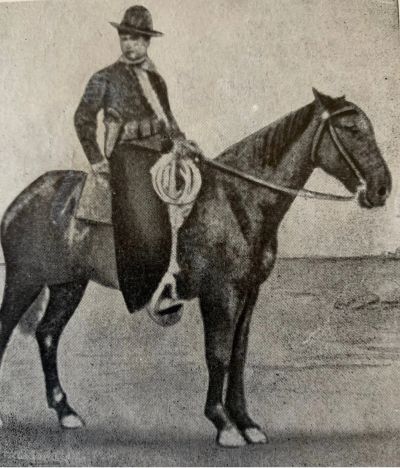
Women who relocated to the frontier West of the 1800’s found that unless they had the protection of a father, brother or husband, they were faced with a very dire future. There were not many respectable businesses where they could earn a living. If a woman was a wife, mother, teacher, baker or could run a boarding house, she was considered fortunate indeed. But if she was a alone with no support or a minor orphaned girl, her prospects were much less. She might be taken in as a servant or she may face a life of being a saloon dance hall girl or falling into prostitution. Marriage to any bachelor was a possibility, but not always a good one.
Two women who came West and took up ranching in the Owyhee Mountains of southwest Idaho near the town of DeLamar, approached the challenges of being a female out West in a unique manner. They chose to wear men’s clothing in order to blend in, to not appear vulnerable. These two women were Josephine Monaghan (known as Little Jo) and Jean Heazle.
Jo Monaghan was small, only 5’2” tall and had a high voice. Despite that, the male population accepted her as a male, just a very strange male. She had various jobs: miner, sheep herder, ranch hand, stable worker, top wrangler. She accumulated a few horses and a herd of cattle and lived a quiet, unassuming life alone along Succor Creek. When the sheep drives brought the flocks near a ranch, Little Jo was often a part of the crew. The herders were offered the upstairs of the rancher’s house where they could sleep between crisp, clean sheets and got a hot bath. But Little Jo made the excuse that she was used to camping out and didn’t sleep with the men. It wasn’t until she died and the undertaker prepared her for burial that everyone was surprised to find that Little Jo Monaghan was really a female. Her life inspired the film “The Ballad of Little Jo.”
Jean Heazle emigrated from Ireland alone and wore men’s clothing aboard the ship which was safer than wearing a dress. She traveled across the U.S. and joined her brother, George, near DeLamar, Idaho. Getting away from the damp weather in Ireland and settling in the dry air of Idaho soon made her respiratory problems improve. She was convinced that wearing men’s clothing just made more sense when a person is herding cattle.
However, she never tried to hide her feminine side and when she was in the mood, she would don a skirt and attend church or some other event. People soon accepted her need to wear long pants when she told them why. Once, a heavily loaded wagon turned over, pinning her to the ground by her skirts all night long. She wasn’t rescued until morning. Her greatest joy in life was raising and racing horses. She proved up on a homestead ranch on Louse Creek in the Owyhee Mountains a few miles from DeLamar, being the area’s last permanent resident. She passed away in 1949.